
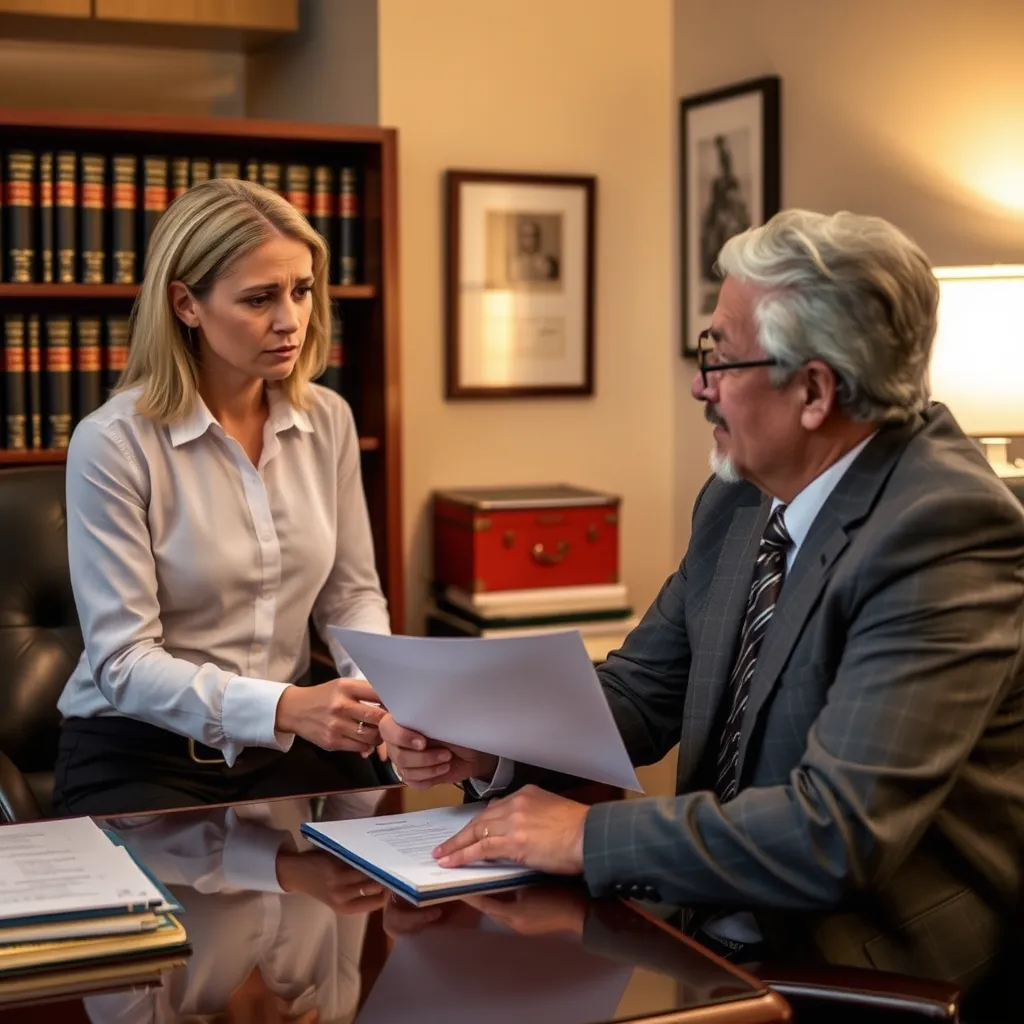
Spousal Support Lawyer Fairfax, VA
Spousal support—often called alimony—can be one of the most contested issues in a Virginia divorce. Whether you are the spouse seeking support or the one being asked to pay, the stakes are significant: monthly payments tied to Virginia’s statutory factors, potential modification or termination triggers, and enforcement mechanisms that can reach wages and tax refunds. In Fairfax County and the City of Fairfax, spousal support matters are heard in the Fairfax County Circuit Court (4110 Chain Bridge Road, Suite 210, Fairfax, VA 22030) and the Fairfax County Juvenile and Domestic Relations District Court for support-only proceedings. Law Offices Of SRIS, P.C. Concentrates its family law practice on these courts, and Mr. Sris and the firm’s Of Counsel attorneys work to help clients reach workable support arrangements. If you need guidance on spousal support in Fairfax, reach the firm at (888) 437-7747 to schedule a consultation. Law Offices Of SRIS, P.C. – Advocacy Without Borders.
What Spousal Support Means in Fairfax, VA
Virginia law governs spousal support under Va. Code § 20-107.1. Unlike community-property states, Virginia is an equitable-distribution jurisdiction, meaning the court decides support based on a list of statutory factors—not a formula. Those factors include each spouse’s earning capacity, financial needs and obligations, the standard of living during the marriage, the duration of the marriage, and contributions made by each spouse to the family and to the other’s education or career. In Fairfax, these considerations are weighed by judges in the Fairfax County Circuit Court for spousal support connected to a divorce, and in the Juvenile and Domestic Relations Court for support-only petitions when the parties are not seeking a divorce.
Fairfax’s high cost of living and the presence of many dual-income households often make the factual inquiry more detailed. A spouse who left the workforce to raise children, or who supported the other spouse through professional training, may have a claim for support that helps maintain the marital standard of living during a transition period. The court also examines whether a party is voluntarily underemployed and can impute income. Both pendente lite support (temporary support while the case is pending) and permanent support are available. The legal landscape in Fairfax requires a clear presentation of financial evidence, from tax returns to experienced attorney valuations of business interests, to frame a support request or defense.
How Mr. Sris and the Firm’s Of Counsel Attorneys Handle Spousal Support Cases
When you bring a spousal support matter to Law Offices Of SRIS, P.C., the focus starts with a thorough financial analysis. The firm’s attorneys gather income documentation, asset and debt statements, and evidence of each spouse’s earning capacity. They look at whether vocational evaluations or forensic accounting may be needed to address issues such as hidden income or business cash flow. The goal is to present the court with a clear financial picture—whether the firm is advocating for an award of support, opposing an inflated claim, or seeking to modify an existing order.
Much of spousal support practice involves negotiation and mediation. Mr. Sris and the firm’s Of Counsel attorneys aim to negotiate a settlement that avoids the uncertainty of a judge’s ruling. Virginia allows parties to agree on the amount, duration, and modifiability of support in a separation agreement. If the case does not settle, the firm is prepared to litigate before the Fairfax County Circuit Court, presenting testimony and documentary evidence to support the client’s position. For enforcement or modification of an existing order, the firm files the appropriate motion and works to resolve the dispute efficiently.
About Mr. Sris and the Firm’s Of Counsel Attorneys
Law Offices Of SRIS, P.C. was founded in 1997 by Mr. Sris, Owner and Founder. A former prosecutor, Mr. Sris brings a multi-state perspective to family law, having practiced in Virginia, Maryland, the District of Columbia, New Jersey, and New York. His legislative involvement includes testimony before the Virginia House Courts of Justice Committee in support of 2019 HB 635 (chief patron Del. David Bulova), which addressed equitable-distribution procedures. Mr. Sris and the firm’s Of Counsel attorneys share extensive combined legal experience. Results may vary. Together, they handle spousal support cases from initial pleading through trial, drawing on the firm’s deep familiarity with Fairfax County courts.
Frequently Asked Questions
How is spousal support calculated in Virginia?
Virginia courts calculate spousal support based on the 13 factors listed in Va. Code § 20‑107.1, not a formula. Judges consider the financial needs and earning capacities of each party, the standard of living established during the marriage, the duration of the marriage, and each spouse’s contributions—both monetary and non‑monetary—to the family and to the other spouse’s education or career advancement. The court also examines age, health, and whether a spouse is voluntarily underemployed. Because the analysis is fact‑intensive, the outcome can vary widely from case to case. Presenting a well‑documented financial picture is critical in any Fairfax support proceeding. For guidance on how the factors apply to your situation, contact Law Offices Of SRIS, P.C. at (888) 437‑7747.
How long does spousal support last in Virginia?
The duration of spousal support depends on the court’s assessment of the need for support and the ability to pay, as well as the length of the marriage. Support can be ordered for a defined period—often called rehabilitative support—to allow a spouse to gain education or work experience. In marriages of long duration where one spouse cannot become self‑supporting due to age, health, or other factors, the court may award support of indefinite duration. The support obligation also terminates upon the remarriage of the recipient or the death of either party, unless the agreement or order provides otherwise. A Fairfax attorney can help you understand what a realistic duration might look like based on your circumstances.
Can spousal support be modified in Virginia?
Yes, spousal support may be modified if either party demonstrates a material change in circumstances. A material change can include a substantial increase or decrease in income, involuntary job loss, a serious health condition, or cohabitation of the recipient in a relationship analogous to marriage. The party seeking modification must file a motion in the court that originally entered the order. If the support is based on a contractual agreement that states it is non‑modifiable, modification may be unavailable. The firm’s attorneys review the specific order and the facts to advise whether a modification motion is likely to succeed. To discuss your situation, reach the firm at (888) 437‑7747.
What if my ex‑spouse fails to pay court‑ordered spousal support?
When a former spouse fails to pay spousal support, you can ask the court to enforce the order through contempt proceedings, wage garnishment, or other collection mechanisms. The court may find the non‑paying spouse in contempt and impose fines or even jail time in serious cases. Virginia also allows income‑withholding orders and interception of tax refunds. The firm handles enforcement actions by filing a show‑cause motion and presenting evidence of the missed payments. Swift action often increases the likelihood of collecting past‑due support.
Do I need a lawyer to request spousal support in Fairfax?
You are not required to have a lawyer, but spousal support cases involve complex financial issues and procedural rules that can be difficult to manage without representation. Determining the right amount of support, locating and valuing marital assets and income streams, and complying with the Fairfax County Circuit Court’s scheduling and evidence requirements are tasks that benefit from experienced counsel. A lawyer can also help negotiate a settlement that avoids a contested hearing. For a consultation, reach Mr. Sris and the firm’s Of Counsel attorneys at (888) 437‑7747.
Related family law pages:
Family Law Fairfax County |
Family Law Falls Church |
Family Law Prince William County
Primary legal sources:
Virginia Code § 20‑107.1 (Spousal Support) |
Fairfax County Circuit Court
Attorney advertising. Prior results do not guarantee a similar outcome.
Results may vary.
Case results depend on a variety of factors unique to each case.