
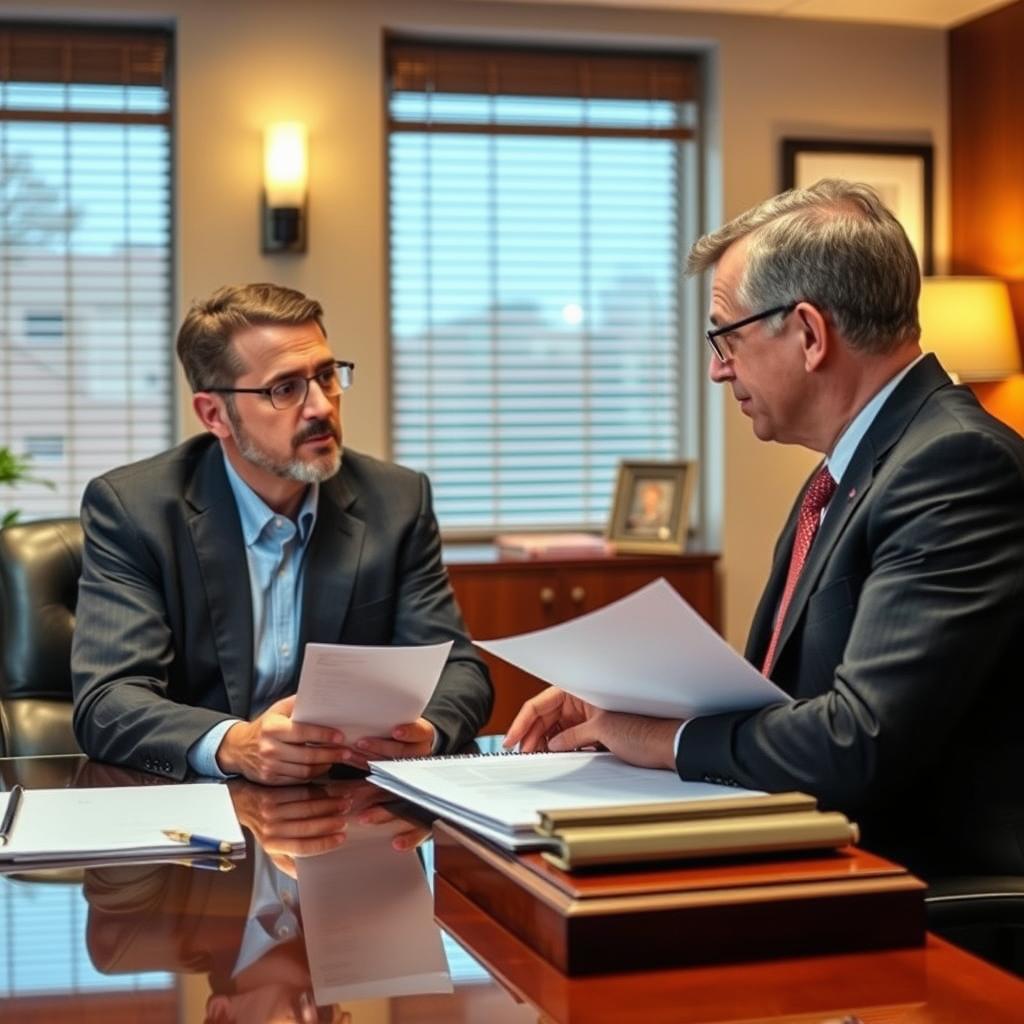
Permanent Alimony Lawyer Arlington County, VA
Permanent alimony—referred to in Virginia as indefinite spousal support—is a post-divorce financial remedy available when one spouse cannot achieve self‑sufficiency due to age, health, disability, or other circumstances that make ongoing support necessary. In Arlington County, these determinations are governed by Va. Code § 20‑107.1, which directs the court to weigh factors including the duration of the marriage, the standard of living established during the union, the financial resources and earning capacity of each party, and each spouse’s contributions to the marriage. The Arlington County Circuit Court, located at 1425 N. Courthouse Rd, handles all divorce and spousal support proceedings within the Seventeenth Judicial District. Because proving the need for indefinite support—or defending against an unjustified request—requires a strong presentation of financial evidence and a clear understanding of how the court applies the statutory factors in practice, working with an attorney who is familiar with both Virginia family law and local court expectations is a key consideration. Law Offices Of SRIS, P.C., founded in 1997, represents individuals throughout Northern Virginia in family law matters, including spousal support negotiations, litigation, modification, and enforcement. To discuss your situation, reach our Arlington location at (888) 437‑7747. Law Offices Of SRIS, P.C. – Advocacy Without Borders.
What Permanent Alimony Means in Arlington County
Virginia courts use the term “indefinite spousal support” for what many people call permanent alimony. Unlike temporary support paid while a divorce is pending or rehabilitative support that lasts for a set period while the recipient trains or re‑enters the workforce, indefinite support continues with no predetermined end date. It is reserved for cases where the evidence shows the spouse seeking support will not reasonably become self‑supporting through appropriate employment. The Arlington County Circuit Court has exclusive original jurisdiction over divorce and spousal support determinations. In a contested case, the judge applies the thirteen factors listed in Va. Code § 20‑107.1, which range from each party’s age, physical condition, and earning ability to the decisions made during the marriage that affected career opportunities. The local cost of living, the types of employment typically available in the Northern Virginia market, and the specific financial circumstances of the household all inform how the statutory factors play out in an Arlington courtroom. Because the judge has broad discretion, a well‑crafted presentation that ties the evidence directly to the statutory considerations can have a substantial influence on the outcome.
Spouses who live in Arlington, Crystal City, Rosslyn, Clarendon, Ballston, Pentagon City, or Shirlington frequently encounter support disputes that involve the valuation of professional practices, the treatment of stock options and restricted stock units, the income imputed to a spouse who is voluntarily underemployed, and the effect of a long marriage on a homemaker’s ability to re‑enter the workforce. The firm’s attorneys are experienced in working with vocational evaluators, accountants, and other professionals to develop the factual record the court needs under § 20‑107.1. Whether the goal is to obtain support, to oppose a request for indefinite payments, or to modify an existing award, a practical understanding of how the Arlington County Circuit Court handles these issues helps both sides make informed decisions throughout the process.
How Mr. Sris and the Firm’s Of Counsel Attorneys Handle Alimony Cases
When a client comes to Law Offices Of SRIS, P.C. with a spousal support concern, the first step is a detailed review of the financial picture—income, expenses, assets, debts, and the history of each spouse’s contributions to the marriage. The firm’s Of Counsel attorneys work to identify the specific statutory factors that are most favorable to the client’s position. In many cases, this involves assembling a team of outside attorneys who can provide forensic accounting, business valuation, or vocational assessments. The goal during negotiation is to reach a resolution that provides clarity and financial stability without the cost and uncertainty of trial. When a negotiated agreement cannot be reached, the firm’s attorneys prepare the matter for a hearing in the Arlington County Circuit Court, presenting the evidence in a way that addresses each factor the judge must consider under Virginia law.
Post‑judgment matters are another focus. Even after a final decree is entered, circumstances often change—a former spouse’s income may increase or decrease, the recipient may remarry or begin cohabitating in a relationship analogous to marriage, or one party may seek to enforce an arrearage. The firm represents clients in modification proceedings and in contempt actions arising from unpaid support. Throughout the process, the firm’s attorneys keep the client informed of what the court can realistically order and what the available evidence supports, so that the client can make decisions based on a clear understanding of the legal landscape.
About Mr. Sris and the Firm’s Of Counsel Attorneys
Mr. Sris, Owner and Founder of Law Offices Of SRIS, P.C., has practiced law since 1997. A former prosecutor, he brings an analytical approach to family law matters, including complex property division and support disputes. Mr. Sris testified before the Virginia House Courts of Justice Committee in support of 2019 HB 635 (chief patron Del. David Bulova), a bill that revised the equitable distribution provisions of the Virginia Code. He is admitted to practice in Virginia, Maryland, the District of Columbia, New Jersey, and New York.
The firm’s Of Counsel attorneys are independent practitioners who collaborate with Mr. Sris on family law cases. They have extensive experience appearing in the Arlington County Circuit Court and in the General District and Juvenile and Domestic Relations courts of Northern Virginia. The firm has documented favorable outcomes in all reported instances of the 115 case results across all practice areas in Arlington County. Results may vary. in any individual matter.
Frequently Asked Questions
What is the difference between temporary and permanent alimony in Virginia?
In Virginia, spousal support can be temporary (pendente lite), rehabilitative for a set period, or indefinite—commonly called permanent—when the recipient cannot become self‑supporting. Temporary support is paid while the divorce is pending; rehabilitative support allows the recipient time to acquire education or training. Indefinite support continues without a preset end date and is ordered only when the evidence shows that self‑sufficiency is not reasonably attainable. The court examines the factors listed in Va. Code § 20‑107.1 to determine which type of support is appropriate. To discuss your situation, reach Law Offices Of SRIS, P.C. at (888) 437‑7747.
How does the Arlington court decide whether to award indefinite spousal support?
The court considers the age, health, earning capacity, and financial resources of each spouse, the standard of living during the marriage, and the contributions each made to the household and to the other’s career advancement. If the evidence shows that one spouse cannot reasonably be expected to become self‑supporting through appropriate employment—because of age, disability, or a long absence from the workforce—the judge may order indefinite support. The Arlington County Circuit Court applies the factors in Va. Code § 20‑107.1 and has broad discretion to tailor the award to the facts of the case. For a consultation, contact Law Offices Of SRIS, P.C. at (888) 437‑7747.
Can permanent alimony be modified in Virginia?
Yes, indefinite spousal support may be modified upon a showing of a material change in circumstances, such as a substantial income change, the recipient’s remarriage, or cohabitation analogous to marriage. The party seeking modification files a motion in the circuit court that issued the original award. The court then reviews the current financial situation under the same statutory factors. The party requesting the change carries the burden of proving that circumstances have materially shifted since the last order. To discuss the details of your matter, reach our Arlington location at (888) 437‑7747.
How long does permanent alimony last in Virginia?
Indefinite spousal support continues until the death of either party, the recipient’s remarriage, or a court order terminating it based on changed circumstances. There is no automatic expiration date. The paying spouse may ask the court to end or reduce support if the recipient becomes self‑supporting, remarries, or cohabitates in a relationship analogous to marriage. Similarly, the recipient may seek an increase if the payor’s income rises significantly. Law Offices Of SRIS, P.C. can advise on whether a modification is appropriate.
Do I need a lawyer to seek or oppose indefinite spousal support in Arlington County?
While you are not legally required to hire an attorney, experienced legal representation can be critical in gathering the financial evidence and presenting the statutory factors to the court. The Arlington County Circuit Court’s decision on spousal support is heavily fact‑driven, and an attorney can help you develop the record, work with necessary attorneys, and advocate for a result that reflects your circumstances. For guidance on your specific situation, reach Law Offices Of SRIS, P.C. at (888) 437‑7747.
Learn more about family law representation in other Northern Virginia counties: Fairfax County Family Law Lawyer, Prince William County Family Law Lawyer, Stafford County Family Law Lawyer, Loudoun County Family Law Lawyer, Fauquier County Family Law Lawyer.
Additional resources: Virginia Code Title 20 (Domestic Relations), Virginia Court System, Arlington County Circuit Court.
Attorney advertising. Prior results do not guarantee a similar outcome. Results may vary.
Case results depend on a variety of factors unique to each case.