
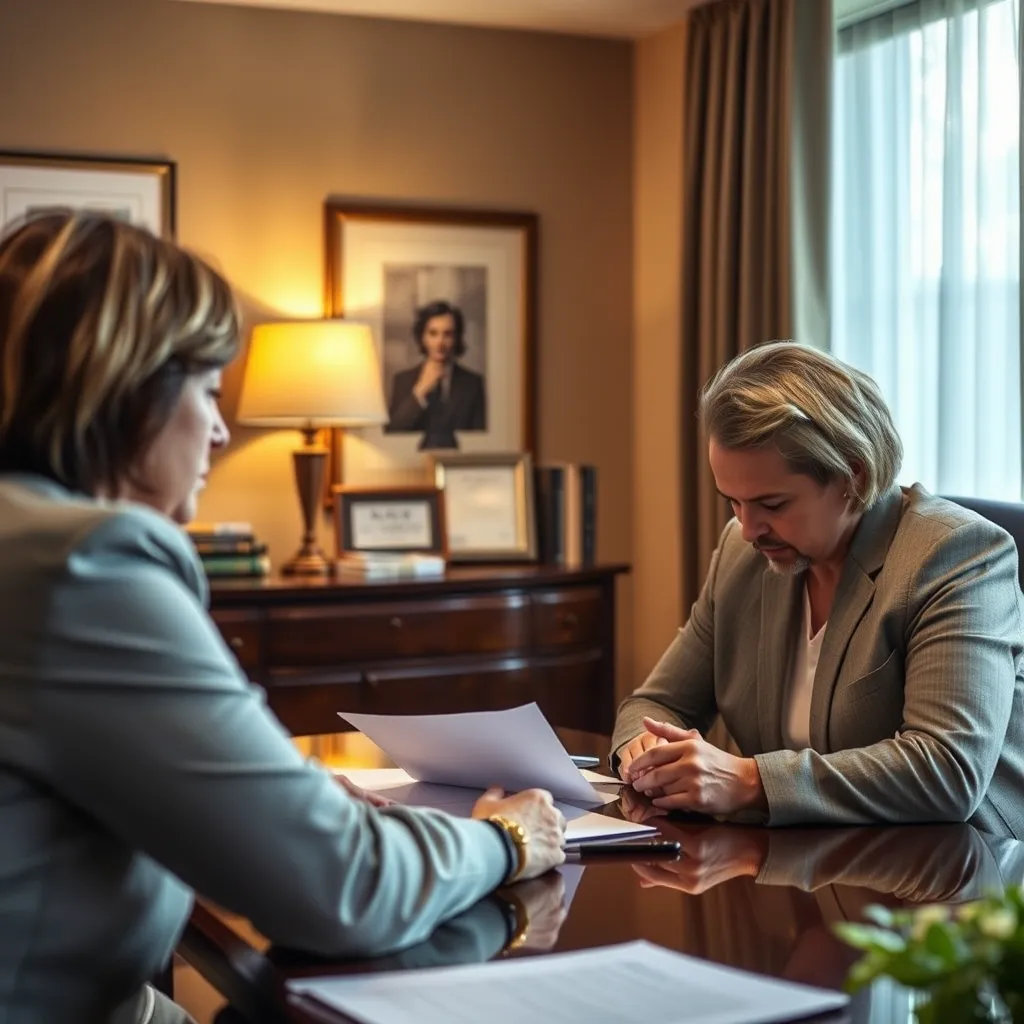
Marital Property Lawyer Fairfax, VA
When a marriage ends in Fairfax, Virginia, the division of property is not automatically an equal split. Virginia follows equitable distribution under Va. Code § 20‑107.3. The Fairfax County Circuit Court—which handles all divorce and property division matters—classifies assets as marital, separate, or hybrid, then determines a fair allocation based on statutory factors. A Fairfax marital property lawyer helps you identify what you own, trace what you brought into the marriage, and present a reasoned case for an equitable outcome. Mr. Sris and the firm’s Of Counsel attorneys represent clients in Fairfax County and the City of Fairfax, guiding them through the property division process with a clear, practical approach. To discuss your situation, reach Law Offices Of SRIS, P.C. at (888) 437‑7747. Law Offices Of SRIS, P.C. – Advocacy Without Borders.
What Marital Property Means in Fairfax, Virginia
In Virginia, marital property includes nearly everything acquired by either spouse during the marriage, regardless of whose name appears on the title. Bank accounts, real estate purchased after the wedding, retirement benefits earned during the marriage, business interests, vehicles, and even debts can be classified as marital. Separate property—assets owned before the marriage, inheritances, and gifts from third parties—remains with the original spouse, though any increase in value tied to marital effort can become subject to division. The Fairfax County Circuit Court, located at 4110 Chain Bridge Road, Suite 210, Fairfax, VA, is the venue for resolving disputes over classification and distribution. The Fairfax County Juvenile and Domestic Relations District Court handles custody and support but does not divide property; that authority rests solely with the Circuit Court.
Virginia’s equitable distribution law does not set a fixed formula. The court weighs eleven factors listed in § 20‑107.3, including the length of the marriage, each spouse’s contributions to the family’s well‑being, the circumstances that led to the separation, and the tax consequences of a proposed division. Because the analysis is fact‑intensive, presenting a thorough picture of your financial life is essential. Mr. Sris and the firm’s Of Counsel attorneys work with clients to inventory assets, identify hidden or undervalued property, and advocate for a division that reflects what is fair under the law, not merely a surface‑level 50‑50 split.
For residents of the City of Fairfax, the property division proceeding takes place at the Fairfax City Circuit Court, 10455 Armstrong Street, Room 101, Fairfax, VA. While the courthouse is different, the governing statute and equitable principles remain identical. Whether your case is heard in the county or city court, the approach to classifying and valuing marital property stays the same, though local procedural nuances can influence how the case is presented. Our Fairfax location serves clients appearing in both courts.
How Mr. Sris and the Firm’s Of Counsel Attorneys Handle Marital Property Cases
Every marital property matter begins with a careful inventory. The identification phase catalogues real estate, financial accounts, retirement plans, stock options, business holdings, personal property, and liabilities. Once the universe of assets is mapped, the classification step separates what is marital from what is separate—a stage that often hinges on tracing the origin of particular funds or the character of a pre‑marital asset. Mr. Sris and the firm’s Of Counsel attorneys draw on decades of multi‑state experience to challenge or support classification arguments with documentary evidence and, where appropriate, forensic accounting analysis.
Valuation comes next, especially for complex assets. Business interests may require a professional business valuation; retirement accounts need a proper application of the coverture fraction; real estate may call for a comparative market analysis. The firm works with qualified financial professionals when a matter demands it, but remains centrally involved in framing how those values should shape the ultimate division. Once classification and value are established, the strategy turns to negotiation or litigation. Many clients reach a comprehensive separation agreement that resolves property division without trial. When trial is unavoidable, the firm advocates in the Fairfax County or City Circuit Court for a distribution that protects the client’s long‑term financial interests.
About Mr. Sris and the Firm’s Of Counsel Attorneys
Mr. Sris, Owner and Founder of Law Offices Of SRIS, P.C., established the firm in 1997. He is a former prosecutor and is admitted to practice in Virginia, Maryland, the District of Columbia, New Jersey, and New York. His background includes testifying before the Virginia House Courts of Justice Committee in support of 2019 HB 635 (chief patron Del. David Bulova), a bill that revised an aspect of Virginia’s equitable distribution statute. This experience gives him a distinctive perspective on how statutory changes affect property division in Fairfax.
The firm’s Of Counsel attorneys bring extensive combined legal experience. They appear regularly in Fairfax County and Fairfax City courts, and their collective background includes years of litigation in family law, criminal defense, and civil matters. On every marital property case, Mr. Sris and the firm’s Of Counsel attorneys tailor their strategy to the client’s specific circumstances—whether the estate is modest or includes high‑value, complex assets. For a consultation, reach Mr. Sris and the firm’s Of Counsel attorneys at (888) 437‑7747.
Frequently Asked Questions
What is considered marital property in Virginia?
Marital property in Virginia includes all property acquired by either spouse during the marriage, regardless of how title is held, with certain exceptions for gifts and inheritances. Under Va. Code § 20‑107.3, wages earned, real estate purchased, retirement benefits accrued, and debts incurred during the marriage are generally marital. Separate property—assets owned before the marriage or received individually by gift or inheritance—remains with the original spouse. However, any appreciation in value of separate property that results from marital effort or contributions can be subject to equitable distribution. The Fairfax County Circuit Court makes the final classification determination in divorce proceedings.
How does a Virginia court divide marital property?
Virginia courts divide marital property under the principle of equitable distribution, which means a fair—but not necessarily equal—allocation based on eleven statutory factors. Those factors include each spouse’s monetary and non‑monetary contributions, the duration of the marriage, the ages and health of the parties, the reasons for the divorce, and the tax implications of any proposed division. The judge has considerable discretion. A marital property lawyer in Fairfax can present evidence and arguments that highlight the factors most favorable to your position, aiming for a result that is truly equitable under the unique facts of your case.
What is the difference between marital and separate property?
Marital property is anything acquired during the marriage that is not a gift or inheritance, while separate property is what each spouse owned before the marriage or received individually as a gift or inheritance. The distinction matters because only marital property is subject to division. Tracing can be complex: if separate funds were commingled with marital funds, a spouse may need to demonstrate their separate interest through clear and convincing evidence. The firm works with financial attorneys when necessary to establish the origin and character of contested assets in Fairfax County Circuit Court.
Do I need a lawyer for marital property division in Fairfax?
Virginia law does not require you to hire a lawyer, but representing yourself in a marital property case carries significant risk because classification and valuation issues are legally nuanced. The court applies the statutory factors without adjusting for a party’s lack of legal training, and an unrepresented spouse may unwittingly waive rights to retirement benefits, business interests, or other substantial assets. Mr. Sris and the firm’s Of Counsel attorneys handle all aspects of property division, from informal negotiation to formal litigation, and work to protect the financial interests of clients throughout Fairfax County and the City of Fairfax.
Can a marital settlement agreement resolve property issues without going to court?
Yes, a marital settlement agreement—often called a separation agreement—can resolve all property division, support, and custody matters outside of court, provided both spouses voluntarily sign and the agreement is incorporated into a final divorce decree. A well‑drafted agreement can save time, reduce conflict, and give the parties more control over the outcome. The firm’s attorneys negotiate and draft property settlement agreements that address classification, valuation, and distribution of assets while ensuring the terms are fair and enforceable under Virginia law.
How does the court value complex assets like a business or retirement account?
The court values complex assets by relying on expert testimony, financial records, and accepted valuation methodologies such as income, asset, or market approaches for businesses, and the coverture fraction for retirement accounts. Business valuation in a Fairfax divorce often involves forensic accountants who analyze cash flow, goodwill, and market conditions. For retirement plans, only the portion earned during the marriage is divisible. The firm coordinates with qualified financial professionals and presents valuation evidence in a way that supports an equitable distribution under Virginia’s statutory framework.
Related Pages: Fairfax County Family Law Lawyer | Falls Church Family Law Lawyer | Prince William County Family Law Lawyer | Manassas Family Law Lawyer
Official Resources: Virginia Code § 20‑107.3 – Equitable Distribution | Virginia Judicial System
Attorney advertising. Prior results do not guarantee a similar outcome. Results may vary. Engaging Law Offices Of SRIS, P.C. Requires a signed engagement agreement.
? 1997‑2026 Law Offices Of SRIS, P.C.
Case results depend on a variety of factors unique to each case.