
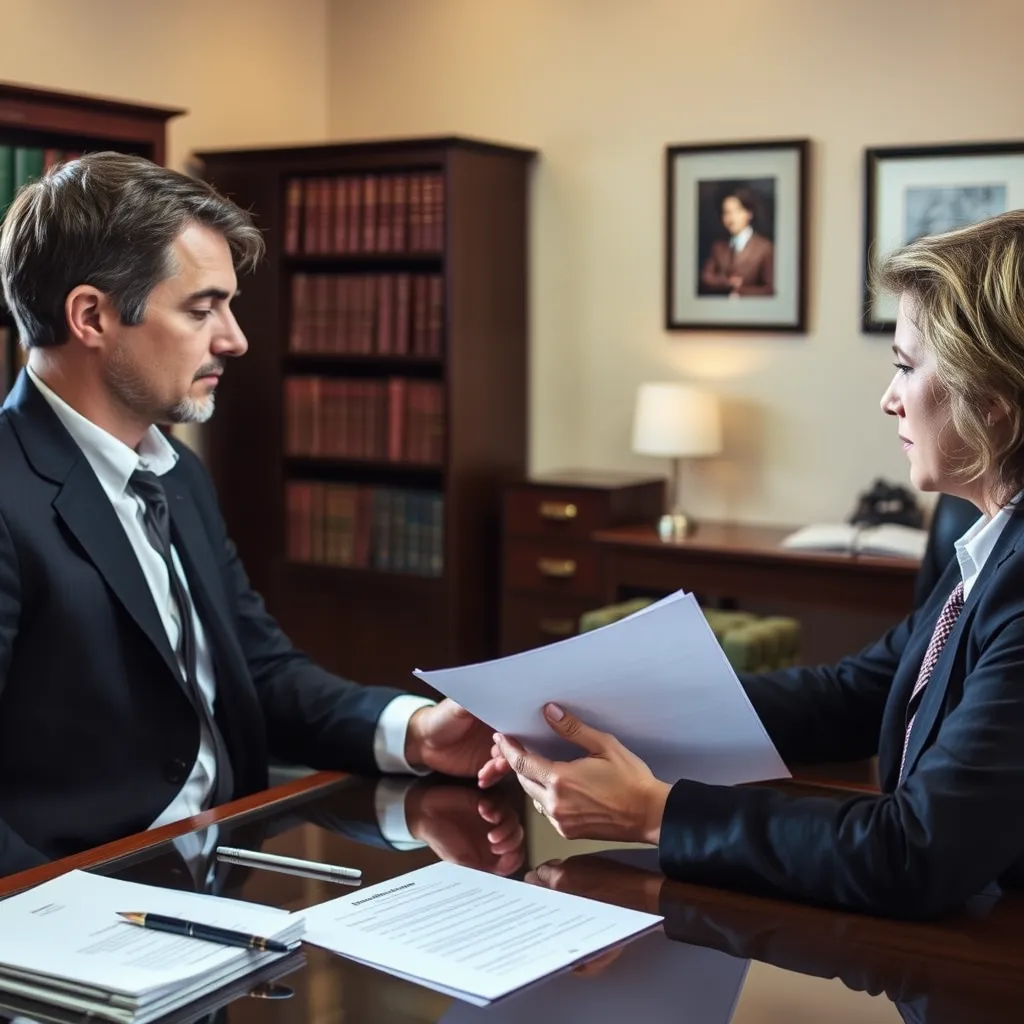
Alimony Modification Lawyer Falls Church, VA
When a Virginia spousal support order no longer reflects the financial reality of either party, a modification petition may be warranted. From its Fairfax Location, Law Offices Of SRIS, P.C. serves clients in Falls Church and nearby Northern Virginia communities. Mr. Sris and the firm’s Of Counsel attorneys appear regularly in Falls Church Circuit Court and Falls Church Juvenile and Domestic Relations District Court on behalf of individuals seeking to increase, decrease, or terminate alimony under Va. Code § 20-107.1. A modification proceeding requires clear evidence of a material change in circumstances, and the court’s decision can have lasting financial effects. Whether you are the payor or the payee, having an experienced Virginia family law attorney evaluate your case is a critical step. To schedule a consultation, call (888) 437-7747. Law Offices Of SRIS, P.C. – Advocacy Without Borders.
What Alimony Modification Means in Falls Church, VA
Virginia law permits the court to modify spousal support when a material change in circumstances has occurred that was not foreseen at the time of the original order. Under Va. Code § 20-107.1, the court weighs a series of statutory factors—including each party’s income, earning capacity, health, standard of living during the marriage, and the duration of the marriage—when deciding whether a modification is justified and, if so, what the new amount should be. Common events that can satisfy the material-change standard include a substantial change in income, involuntary job loss, the payee’s remarriage or cohabitation, or a significant health condition affecting earning ability.
In Falls Church, modification motions are filed either in the Falls Church Circuit Court (if the spousal support order was part of a divorce decree) or in the Falls Church Juvenile and Domestic Relations District Court (for standalone support orders or those tied to child support). Both courts are located at 300 Park Avenue, Suite 151W, Falls Church, Virginia 22046. Law Offices Of SRIS, P.C. maintains its Fairfax Location at 4008 Williamsburg Court, Fairfax, providing convenient access for Falls Church residents. The firm’s attorneys are familiar with local procedures and work to present a thorough evidentiary record to the court.
How Mr. Sris and the Firm’s Of Counsel Attorneys Handle Alimony Modification Cases
The process starts with a detailed review of the existing support order and the facts that purport to justify a modification. The firm’s attorneys gather income documentation, health records, employment histories, and any evidence of cohabitation or a change in living arrangements. A petition to modify is then drafted, filed in the appropriate Falls Church court, and served on the opposing party. From that point, the matter is set for a hearing, and the parties may engage in discovery and negotiation.
Because Virginia courts require proof of a material change, thorough preparation is essential. The firm’s attorneys compile financial affidavits, tax returns, pay stubs, and medical reports, and they may work with vocational attorneys or accountants where the circumstances warrant. If the parties can agree on a revised support figure without a contested hearing, a consent order can be presented to the judge. When a hearing is necessary, the attorneys present the evidence and argue the statutory factors. Throughout the matter, the objective is to secure a modification that fits the parties’ current financial picture. To discuss your situation, contact Law Offices Of SRIS, P.C. at (888) 437-7747.
About Mr. Sris and the Firm’s Of Counsel Attorneys
Mr. Sris, Owner and Founder of Law Offices Of SRIS, P.C., is a former prosecutor who has practiced law since 1997. He is admitted in Virginia, Maryland, the District of Columbia, New Jersey, and New York. Mr. Sris testified before the Virginia House Courts of Justice Committee in support of 2019 HB 635 (chief patron Del. David Bulova). His background includes extensive family law experience, and he routinely handles complex modification and equitable distribution matters.
The firm’s Of Counsel attorneys bring additional depth in family law and litigation. Together with Mr. Sris, they prepare alimony modification cases with a focus on thorough factual development and knowledge of Virginia’s statutory framework. The collective experience of the firm allows it to serve clients effectively in Falls Church and throughout Northern Virginia.
Frequently Asked Questions
When can alimony be modified in Virginia?
A Virginia court may modify spousal support when there has been a material change in circumstances since the original order. Common examples include a significant change in either party’s income, the payor’s involuntary job loss, the payee’s remarriage or cohabitation, or a change in health that affects earning ability. The party seeking modification must file a petition in the court that issued the original order and present evidence to support the claim. A lawyer can help assess whether your circumstances meet the legal threshold.
What factors does a Virginia court consider in an alimony modification case?
Virginia courts weigh the same factors when modifying spousal support as they do when setting it initially under Va. Code § 20-107.1. These include each party’s income, earning capacity, age, health, standard of living during the marriage, length of the marriage, contributions to the family, and the ability of the payor to continue paying while meeting their own needs. The court also considers whether the change was voluntary or involuntary. A family law attorney can help you assemble the evidence the court will review.
Do I need a lawyer for an alimony modification in Falls Church?
While you are not required to have a lawyer, the modification process involves legal standards and procedural rules that can be complex. A petition must be properly drafted, filed in the correct court, and served on the other party. You must also present sufficient evidence to prove a material change. An experienced Virginia family law attorney can evaluate your case, prepare the necessary documents, and appear in the Falls Church Circuit Court or Juvenile and Domestic Relations District Court on your behalf. Legal guidance can help you avoid delays and procedural missteps.
How do I find an alimony modification lawyer in Falls Church, VA?
Start by identifying a multi-state family law firm with experience in Falls Church courts, such as Law Offices Of SRIS, P.C. Look for an attorney who is admitted in Virginia and familiar with the local bench and the procedural requirements of Falls Church Circuit Court and JDR Court. You can request a consultation by calling (888) 437-7747. During the consultation, you can discuss your situation, ask about the attorney’s experience with modification cases, and determine whether the firm is a good fit for your needs.
Can alimony be terminated in Virginia?
Yes, Virginia law allows for the termination of spousal support under certain circumstances. The most common ground is the death of either party or the remarriage of the payee. Cohabitation with another person in a relationship analogous to marriage may also justify termination. A change in the payor’s circumstances so severe that they cannot continue paying—such as permanent disability—may also lead to termination rather than a reduction. A motion to terminate must be filed in the appropriate court with supporting evidence.
Related pages: Fairfax County Family Law Attorney | Fairfax City Family Law Attorney | Prince William County Family Law Attorney
For authoritative reference: Virginia Code Title 20 — Domestic Relations | Virginia Judicial System
Attorney advertising. Prior results do not guarantee a similar outcome.
Case results depend on a variety of factors unique to each case.