
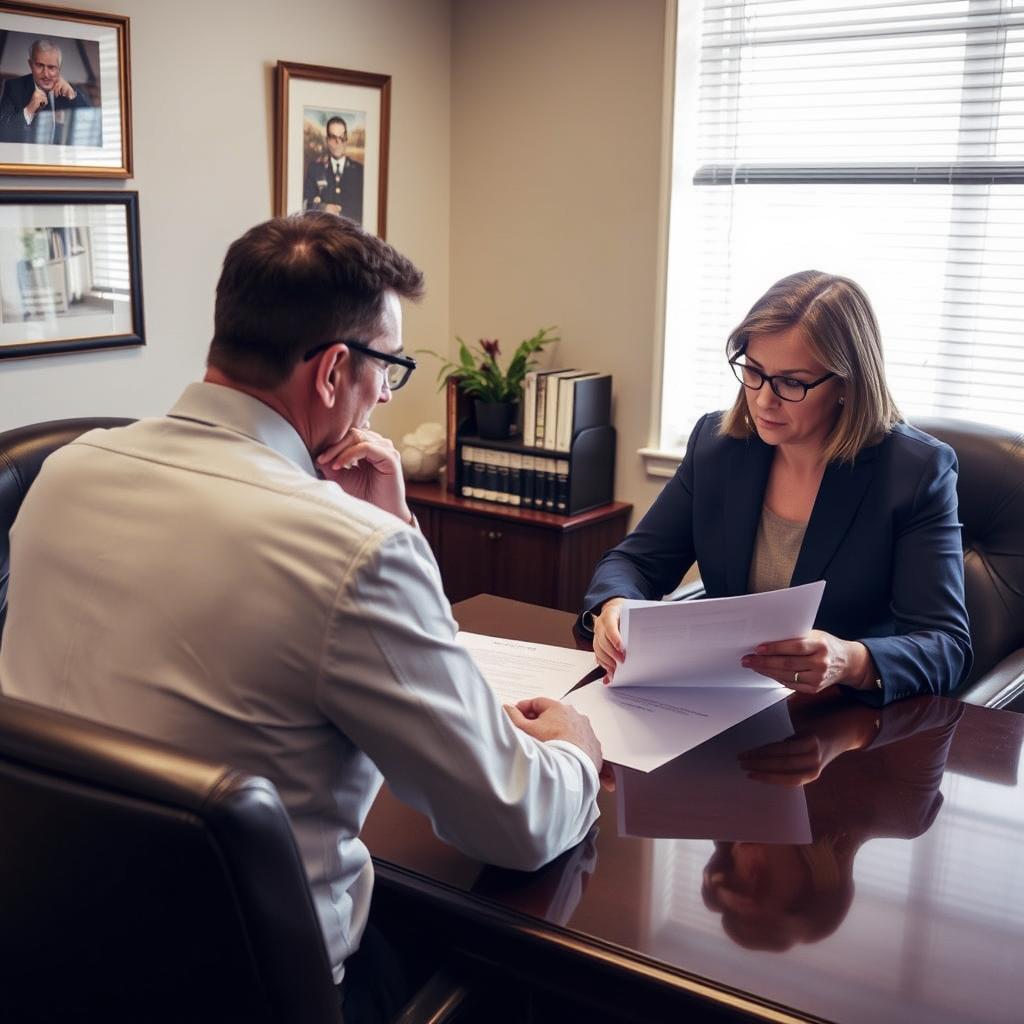
Armed Forces Divorce Lawyer Fairfax County, VA
For military service members stationed at Fort Belvoir, the Pentagon, or any installation in Northern Virginia, divorce raises questions that civilian spouses do not face. The federal Servicemembers Civil Relief Act (SCRA) can pause proceedings, the Uniformed Services Former Spouses’ Protection Act (USFSPA) governs how military retired pay is divided, and jurisdictional rules under Virginia’s domicile and residency statutes determine whether Fairfax County Circuit Court has authority over the marriage. A service member who receives permanent change of station orders during a custody dispute must address relocation under state law and command policies. At Law Offices Of SRIS, P.C., Mr. Sris and the firm’s Of Counsel attorneys represent active-duty members, reservists, and military spouses in divorce, equitable distribution, and custody matters in Fairfax County. To request a consultation, call (888) 437-7747. Law Offices Of SRIS, P.C. – Advocacy Without Borders.
What Armed Forces Divorce Means in Fairfax County
Fairfax County is home to a large military population, including personnel assigned to Fort Belvoir, Marine Corps Base Quantico, and the National Geospatial‑Intelligence Agency campus, as well as civilian employees of the Department of Defense and intelligence agencies. Divorce for military families in Fairfax County involves the same Virginia statutory framework that applies to all residents — Va. Code § 20‑91 (grounds for divorce), § 20‑107.3 (equitable distribution), and § 20‑124.3 (child custody factors) — plus several federal statutes and service regulations that interact with state law in meaningful ways.
One of the most important is the Servicemembers Civil Relief Act. When a service member is on active duty and unable to participate in a court proceeding, the court may stay the case for at least 90 days, and additional stays can be granted if military duties materially affect the member’s ability to proceed. This does not eliminate the obligation to respond, but it prevents a default judgment from being entered while a member is deployed or assigned to a location that prevents meaningful participation. Fairfax County Circuit Court is familiar with SCRA stay motions and regularly handles cases where one party is subject to deployment orders.
Jurisdiction is another distinctive issue. A Virginia court may exercise personal jurisdiction over a service member who is domiciled in Virginia even if that individual is stationed elsewhere, and it may adjudicate the divorce of a service member stationed in Virginia who is a domiciliary of another state if the member consents to jurisdiction (Va. Code § 20‑97). The practical consequence is that a military couple with connections to multiple states often has choices about where to file, and the selection of forum can affect property division and support obligations. An attorney experienced in armed forces divorce can assess which forum yields the most predictable outcome under the USFSPA.
How Mr. Sris and the Firm’s Of Counsel Attorneys Handle Armed Forces Divorce Cases
Military divorce clients in Fairfax County work with Mr. Sris and the firm’s Of Counsel attorneys to address the full range of issues that arise in a service-connected marriage. The firm’s approach begins with an evaluation of jurisdiction, residency, and the applicability of the SCRA, so that no procedural deadline is missed and no default is entered while a party is unavailable due to military obligations. If a stay is appropriate, the Of Counsel attorneys file the necessary motion and request a hearing before the Fairfax County Circuit Court. If a stay is not in the client’s interest — for example, when urgent temporary support or custody orders are needed — the firm moves promptly for pendente lite relief under Va. Code § 20‑103.
Discovery in an armed forces divorce often requires attention to records beyond those in a civilian case. Military leave and earnings statements (LES), Thrift Savings Plan statements, service record entries that affect disability rating or future retired pay, and command correspondence regarding deployment or permanent change of station orders all bear on support, custody, and property division. Mr. Sris and the firm’s Of Counsel attorneys routinely work with these documents and with the forensic accountants and pension valuators who are needed when a military pension must be classified as marital or separate property under the USFSPA. The firm’s extensive combined legal experience between Mr. Sris and the firm’s Of Counsel attorneys is applied to negotiating or litigating these issues in the Fairfax County Circuit Court. Results may vary.
About Mr. Sris and the Firm’s Of Counsel Attorneys
Mr. Sris, Owner and Founder of Law Offices Of SRIS, P.C., has practiced family law in Virginia since 1997 and is admitted in Virginia, Maryland, the District of Columbia, New Jersey, and New York. A former prosecutor, he concentrates his practice on complex divorce matters, including those involving military pensions, business valuation, and international assets. The firm’s Of Counsel attorneys bring additional years of litigation experience in criminal defense, traffic, and family law, giving the team a broad base of skill that is valuable in contentious custody and support litigation.
Clients in Fairfax County have access to the firm’s Fairfax location at 4008 Williamsburg Court, Fairfax, VA 22032, by appointment. The firm serves military families stationed throughout Northern Virginia, including those connected to Fort Belvoir, Marine Corps Base Quantico, the Pentagon, and other installations. Reach the firm at (888) 437-7747 to schedule a consultation.
Frequently Asked Questions
How does a Virginia lawyer handle an armed forces divorce when one spouse is deployed?
When a service member is deployed, an attorney can request a stay under the SCRA, file motions to allow remote participation, or proceed with limited issues such as temporary support while the member is unavailable. Fairfax County Circuit Court has experience with deployment-related requests and will generally grant reasonable accommodations when supported by proper documentation. The firm’s Of Counsel attorneys coordinate with command legal assistance offices and can present a plan that protects the service member’s interests without violating the court’s scheduling requirements.
What should a military spouse do if they are served with divorce papers while living in Fairfax County?
Contact a family law attorney immediately to evaluate the complaint and any deadline for response; do not ignore the summons even if you believe the court lacks jurisdiction. The Fairfax County Circuit Court requires an answer within a specific period. If you are on active duty and unable to respond, the firm can file a request for a stay. If you are not the service member, the firm can review the grounds pleaded, including whether the complaint satisfies the residency and domicile requirements of Va. Code § 20‑97, and prepare a response or counterclaim as appropriate.
Can a military pension be divided in a Virginia divorce?
Yes, under the Uniformed Services Former Spouses’ Protection Act, a state court may treat disposable military retired pay as marital property and divide it pursuant to the state’s equitable distribution statute. Fairfax County Circuit Court applies the 11 factors in Va. Code § 20‑107.3 to determine what portion, if any, of the pension is marital and how that portion should be divided. The division is implemented through a military qualifying court order, commonly called a “10/10 order” when the 10‑year overlap rule is met for direct payment by the Defense Finance and Accounting Service.
How is child custody handled when a service member receives PCS orders out of Virginia?
A permanent change of station order does not automatically change a custody order, but the relocating parent must give the other parent 30 days’ written notice under Va. Code § 20‑124.5 and may need to seek court approval to relocate the child. Fairfax County J&DR Court, which handles standalone custody matters, will assess the proposed relocation under the trusted‑interests factors in Va. Code § 20‑124.3. The firm’s attorneys represent both relocating service members and non‑military parents opposing relocation, tailoring arguments to the unique disruption that military moves impose on a child’s stability.
Does the SCRA stop child support from being collected during deployment?
The SCRA does not automatically stop child support; a service member must petition the court for a modification if deployment materially reduces income or prevents compliance with the existing order. Fairfax County courts treat child support obligations as modifiable upon a showing of a material change in circumstances. Mr. Sris and the firm’s Of Counsel attorneys help service members file a motion to modify promptly after receiving deployment orders so that arrears do not accumulate during the absence.
What are the residency rules for filing a military divorce in Fairfax County?
At least one spouse must have been an actual bona fide resident and domiciliary of Virginia for six months before filing (Va. Code § 20‑97). A service member stationed in Virginia who intends to remain permanently may establish domicile; a military spouse who remains in Fairfax County while the member is deployed may also satisfy the residency requirement. The firm’s attorneys review documentation such as the member’s state of legal residence on the Defense Enrollment Eligibility Reporting System, driver’s license, voter registration, and housing records to confirm that the jurisdictional threshold is met before the complaint is filed.
How long does a contested armed forces divorce take in Fairfax County?
The timeline varies by case complexity; an uncontested divorce with a signed separation agreement may resolve in two to four months from filing, while a contested case with custody or pension valuation issues often takes nine to eighteen months or longer. Fairfax County Circuit Court schedules pendente lite hearings within a reasonable timeframe once a motion is filed, but discovery, depositions, and trial dates depend on the court’s calendar and the availability of expert witnesses. The firm works to move each case toward resolution efficiently, using settlement conferences and mediation when possible to reduce the time and expense of litigation.
Do I need an attorney for an armed forces divorce if the marriage is short and there are no children?
Even a short marriage without children may involve pension division, debt allocation, and support waivers that have long‑term consequences; consulting an attorney ensures you understand the legal effect of any agreement before signing it. A property settlement agreement drafted without legal review can inadvertently waive rights to military retired pay or saddle one party with joint debt that becomes unmanageable after separation. The firm offers consultations to review proposed agreements and explain the statutory rights each spouse has under Virginia law.
Internal resources for Fairfax County family law:
- Family Law Lawyer in Prince William County
- Family Law Lawyer in Stafford County
- Family Law Lawyer in Loudoun County
- Family Law Lawyer in Arlington County
- Family Law Lawyer in Fauquier County
Official Virginia primary sources:
Attorney advertising. Prior results do not guarantee a similar outcome. Case results depend on a variety of factors unique to each case. Results may vary. By appointment only. Call (888) 437-7747 to schedule a consultation.