
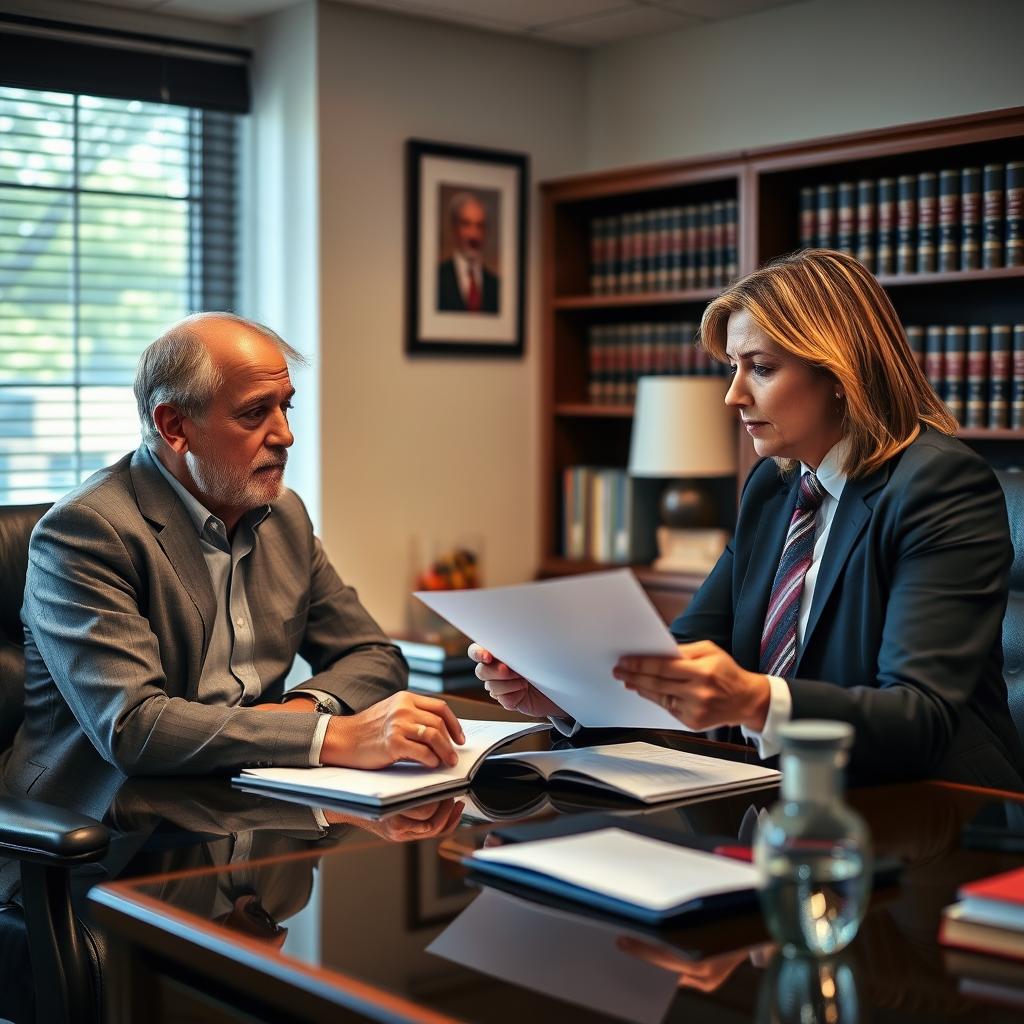
Separation Lawyer Fairfax County, VA
When a couple in Fairfax County decides to live apart, the legal landscape of separation—and the path toward divorce or reconciliation—requires careful planning. In Virginia, separation is not a court-ordered status but a factual condition that creates the foundation for no‑fault divorce, spousal support, and the division of marital property. Law Offices Of SRIS, P.C. Concentrates its practice on family law, including separation matters throughout Fairfax County, Burke, Centreville, Herndon, Reston, McLean, Vienna, and surrounding communities. Our firm, founded in 1997, brings extensive experience to the drafting and enforcement of separation agreements, resolution of contested custody and support issues during the separation period, and the strategic groundwork for eventual divorce proceedings in the Fairfax County Circuit Court. Mr. Sris and his Of Counsel work closely with each client to understand the family’s circumstances and to build a structured approach that protects legal rights while the parties live separate and apart. To request a consultation about separation in Fairfax County, reach Law Offices Of SRIS, P.C. at (888) 437‑7747. Law Offices Of SRIS, P.C. – Advocacy Without Borders.
What Separation Means in Fairfax County, Virginia
Virginia law does not provide for a court‑issued decree of legal separation. Instead, separation is a factual state: one spouse forms the intent to end the marital relationship and the parties cease cohabitation. Under Virginia Code § 20‑91, a no‑fault divorce may be granted after the spouses have lived separate and apart without interruption for one year—or for six months if no minor children are involved and the parties have entered into a written separation agreement that resolves all issues. For Fairfax County residents, the factual separation must be accompanied by at least one spouse’s intent to permanently end the marriage, and there must be no cohabitation during the required period.
The Fairfax County Circuit Court, located at 4110 Chain Bridge Road, Suite 210, Fairfax, VA 22030, has exclusive jurisdiction over divorce and equitable distribution actions. During the separation period, however, the Fairfax County Juvenile and Domestic Relations District Court may hear temporary matters such as custody, visitation, and child support. These parallel court pathways make it essential to address potential disputes early. A carefully drafted separation agreement can resolve property division, spousal support, child custody, and parenting time without the need for litigation, providing stability while the separation period runs. Our firm’s familiarity with the procedures and expectations of both Fairfax County courts allows Mr. Sris and his Of Counsel to advise clients on the most efficient strategy for their specific situation.
The communities we serve—including Fairfax, Burke, Centreville, Chantilly, Herndon, Reston, McLean, Vienna, Tysons, Oakton, Springfield, Annandale, and the Falls Church area—cover a diverse economic and cultural landscape. Separation cases in this region often involve complex financial holdings, real property, retirement accounts, and business interests. Mr. Sris and his Of Counsel bring extensive combined legal experience to evaluate marital assets, negotiate separation agreements, and, when necessary, litigate issues before the Fairfax County Circuit Court. The separation period is also a critical window for gathering financial documents, establishing separate residences, and creating a record that may later support a fault‑ or no‑fault divorce filing.
How Mr. Sris and His Of Counsel Handle Separation Cases
When a client contacts Law Offices Of SRIS, P.C. about a separation in Fairfax County, the first step is a thorough review of the family’s circumstances, legal objectives, and any immediate concerns such as child custody or domestic safety. Mr. Sris, a former prosecutor, applies the same analytical rigor to family law that he developed in criminal practice, examining every detail before recommending a course of action. The Of Counsel team, all experienced litigators, work collaboratively with Mr. Sris to craft a separation strategy that addresses both short‑term needs and the long‑term goal of a fair divorce resolution.
The process typically involves negotiating a comprehensive property settlement agreement—often called a separation agreement—that governs all aspects of the parties’ lives while they live apart. This agreement can cover division of marital property and debts, spousal support, child custody and visitation schedules, child support, health insurance, and tax considerations. Because Fairfax County Circuit Court judges often incorporate separation agreements into final divorce decrees, it is crucial that the document be precise, enforceable, and in compliance with Virginia Code § 20‑107.3 and related provisions. When parties cannot agree, Mr. Sris and his Of Counsel are prepared to file motions for pendente lite relief, such as temporary support and custody orders, in the appropriate Fairfax County court. They also coordinate with forensic accountants, business valuators, and mental health professionals when complex assets or custody evaluations are involved. Throughout the separation, the firm maintains a focus on reducing conflict and positioning the client for a favorable outcome once the statutory separation period has run. Results may vary.
About Mr. Sris and His Of Counsel Team
Mr. Sris is the Owner and Founder of Law Offices Of SRIS, P.C., a multi‑state firm admitted in Virginia, Maryland, the District of Columbia, New Jersey, and New York. As a former prosecutor, Mr. Sris approaches every family law matter with a disciplined attention to factual detail and procedural strategy. He testified before the Virginia House Courts of Justice Committee in support of 2019 HB 635 (chief patron Del. David Bulova). Mr. Sris and his Of Counsel team bring extensive combined legal experience to Fairfax County separation cases, including the negotiation of separation agreements, the litigation of contested custody and support, and the resolution of complex equitable distribution issues. The Of Counsel attorneys—all experienced practitioners engaged through Excella—collaborate on each matter, ensuring that clients benefit from a team approach without the overhead of a larger firm. Mr. Sris and his Of Counsel have documented case results across all practice areas since 1997. Results may vary.
Frequently Asked Questions
What is a separation agreement in Virginia?
A separation agreement is a written contract between spouses that resolves all property, support, and custody issues during the separation period and often forms the basis for the final divorce decree. Under Virginia Code § 20‑109, a properly executed separation agreement is enforceable as a contract. It can address the division of marital property and debts, spousal support, child custody and visitation, and child support. In Fairfax County, such agreements are frequently filed with the court when one spouse later petitions for a no‑fault divorce based on separation. Because the agreement becomes part of the court record, it is critical that its terms be clear and legally sound. Mr. Sris and his Of Counsel draft and review separation agreements to ensure they protect your interests and comply with Virginia law.
Do I need a lawyer to draft a separation agreement in Fairfax County?
You are not legally required to hire a lawyer to draft a separation agreement, but an attorney can help ensure the document is enforceable and fully protects your rights. Virginia law does not mandate legal representation for separation agreements; however, courts scrutinize these agreements for fairness, full financial disclosure, and voluntary execution. A lawyer can identify potential issues—such as overlooked assets, ambiguous support terms, or unenforceable custody provisions—that could later lead to litigation. At Law Offices Of SRIS, P.C., Mr. Sris and his Of Counsel work with clients to negotiate and draft agreements that withstand judicial review and serve as a solid foundation for the divorce process. To discuss your situation, reach our firm at (888) 437‑7747.
How long must my spouse and I live apart to get a divorce in Virginia?
If you have no minor children and have signed a separation agreement, you may file for no‑fault divorce after living separate and apart for six continuous months; otherwise, the required separation period is one year. For couples with minor children, Virginia Code § 20‑91(9)(a) mandates a one‑year separation before a no‑fault divorce can be granted. The six‑month period under § 20‑91(9)(b) is available only when the parties have no minor children and have executed a written separation agreement. During the separation, the spouses must not cohabit, and at least one spouse must intend for the separation to be permanent. The Fairfax County Circuit Court adjudicates the divorce after the statutory period has run. Mr. Sris and his Of Counsel can help you determine which separation ground applies to your circumstances.
What happens to marital property during a separation in Fairfax County?
During a separation, each spouse generally retains control over the property they possess, but Virginia law classifies all assets and debts as marital, separate, or hybrid—and this classification influences how property will be divided in divorce. Under Virginia’s equitable distribution statute, Va. Code § 20‑107.3, marital property includes assets acquired during the marriage, regardless of which spouse holds title. Separate property—such as gifts or inheritances—is excluded. A separation agreement can establish temporary possession, responsibility for debts, and use of the family home. If the parties cannot agree, a pendente lite motion may be filed to preserve assets and prevent dissipation. Our firm frequently works with clients in Fairfax County to inventory and classify property early in the separation, building a record that supports a fair division later.
Can I date or introduce a new partner while I am separated in Virginia?
Although Virginia law does not explicitly prohibit dating during separation, doing so can have significant legal consequences, particularly in fault‑based divorce and custody disputes. Adultery is a fault ground for divorce under Va. Code § 20‑91, and it can affect spousal support if the court finds that the adultery contributed to the breakdown of the marriage. Moreover, introducing a new partner while custody or visitation issues are pending may raise concerns about the child’s best interests under Va. Code § 20‑124.3. Even in a no‑fault divorce, a new relationship can complicate negotiations and inflame conflict. Mr. Sris and his Of Counsel advise clients on the potential risks and help them navigate separation conduct that minimizes legal exposure. For guidance on your specific situation, reach Law Offices Of SRIS, P.C. at (888) 437‑7747.
What if my spouse refuses to sign a separation agreement?
If your spouse will not agree to a separation agreement, you can still pursue a divorce based on separation after the statutory period, although the unresolved issues may need to be litigated. In Fairfax County, the Circuit Court can decide property division, support, and custody even without a signed agreement. You may file a complaint for divorce and request temporary relief—such as support and custody orders—while the case is pending. Mr. Sris and his Of Counsel have experience litigating contested divorce matters in Fairfax County when agreement is not possible. The firm works to assert your rights and obtain a court‑ordered resolution that reflects a fair outcome. To discuss your legal options, contact our firm at (888) 437‑7747.
Attorney advertising. Prior results do not guarantee a similar outcome.
Results may vary.
Case results depend on a variety of factors unique to each case.